Tuesday, July 6, 2010
Lessons in Failure
Don't worry, this isn't a review of The Last Airbender, as that would necessitate actually seeing it. But it is worth noting that, three duds in a row -- this one a catastrophe of proportions significant enough to end a career -- and the spectacular implosion of M. Night Shyamalan's popular art continues to enfold like a star gone nova.
Unrepentant narcissist that he is, no one seems much concerned with the question of "why?" as much as "why does he continue to get financing to make more pictures?"
As something of an amateur storyteller, however, the Shyamalan case is frightening to me because it seems it could happen to anyone. Indeed, it's happened to a number of a widely celebrated filmmakers, from FF Coppola to Woody Allen. This "it" refers to what I can only describe as a loss of mojo.
It's fair to say that the downward spiral, regardless of your opinion of Signs, became more pronounced with The Village. Abandoning all notions of character and settling instead for the monochromatic grammar of "allegory," the film revealed just how tenuous Shyamalan's tendencies always were. He could still work up a scare and conjure casually charged imagery, but in the absence of recognizable characters, the mannered, self-congratulatory artifice that lurked behind the surface of his early work, not to mention the pretense of profundity in his films' conclusions, lurched to the forefront.
Shyamalan's more recent work has been cynical enough to cast doubt on his talents in the first place, which is only fair, I think, because he's such a dick. That said (and a number of my peers would disagree here), I thought Unbreakable and Signs, though certainly lacking the novelty of Shyamlan's debut, were pretty good pictures. Shyamalan, it seemed to me, was genuinely interested in characters and their struggle to find meaning in some capacity of their daily lives; this was explicitly true for both the Bruce Willis protagonists in The Sixth Sense and Unbreakable and Mel Gibson's patriarch in Signs. He respected his audience enough to develop even the most minor of characters, regardless of how silly the picture's premise. Ironically, he appeared to be very good with his actors, getting good to exceptional work from the likes of Willis, Toni Collete, and of course, Haley Joel Osment. The respect was mutual in that the audience was willing to follow these characters to the ends of the arcs, regardless of how ludicrous or manipulative the ending.
About those Shyamlanian endings: I've always thought it a bit overly simplistic to characterize his movies as mechanical exercises solely leading up to a "surprise" ending, for the reasons I've described above, but then I am reminded of how conditioned we are as audiences to procedurals. Just about every show on network television follows a pretty rigid template, leaving the audience little choice other than to impatiently guess who the killer is and watch the rest of the show purely to confirm whether or not they were right. Producers understand this phenomenon perfectly, so rather than try to upset the template, they cater to the audience's need to be right.
Let's take a guy like Hitchcock, to whom Shyamalan, in his better days, was oft compared. Didn't just about every Hitchcock film you can think of end with someone falling, or nearly falling, off of a really, really tall man-made structure? Mount Rushmore in North by Northwest, the Statue of Liberty in Saboteur, a bell tower in Vertigo, a window in... well, Rear Window. Clearly, he liked this idea of falling, so he used it liberally in his films. Good for him, right?
Shyamalan certainly takes a more varied approach to his endings, but the reason his endings are more harmful than Hitchcock's is because they play on the notion that movies -- and by extension, storytelling -- are ultimately just elaborate, cruel cons, and since the ending is the last thing we remember, this is a risky approach to take.
Of course, the revelation of the con can be immensely rewarding, as it is in The Sixth Sense, when it illuminates that which makes us so ready and willing to be conned in the first place. That is, our greatest hopes and fears and desires are literally played out on the screen in ways we can only abstractly imagine, and with the more respectful movies, the emotional, intellectual journey is real, hokey endings and all.
Shyamalan is still working the con, except now he appears to be doing it with a kind of malice. It's happened before: Herman Melville reeled off Typee and Moby Dick, but then he developed a terrible chip on the shoulder after the latter failed to sell through the first printed run. His next novel, Pierre, is one of the most puzzling, ill-conceived novels of all time. The New York Day Book published an article in with the word "CRAZY" in it to describe his downfall. The aptly titled Confidence Man, his last novel, was equally mystifying, though not without merit.
Weezer fans know all about this phenomenon. After Pinkerton, now widely regarded as a pop masterpiece, bombed commercially and perturbed the critics, Rivers Cuomo seemed genuinely angry at his situation and developed a chronic case of diminishing returns, troughing with the nihilistic Make Believe and coasting on a serviceable single here or there ever since. I imagine a narcissist like Shyamalan experienced the same anger when Signs failed to convince everyone that he was the real deal, and The Village bombed.
As droves of angry moviegoers flooded the exits after experiencing the thoroughly self-deprecating yet no-less risible The Happening, I wondered to myself why I enjoyed it so much. Some cons are executed with such impish glee that you can't help but smile and say, "OK. You got me," even when you really, really don't appreciate it. For even when you feel that the author is laughing at you for indulging him, it's highly unlikely that his art originates from such a place.
When Shyamalan set out to make The Sixth Sense and Unbreakable, he was also making them for himself. Just as he was The Happening and Lady in the Water. They are all products of the the ideas he cared about at the time that he made them. Now if only someone could remind him that character, not genre, is his strength, he may yet get back on track...
Tuesday, June 29, 2010
Coffee/Album/Film of the Week
Coffee of the Week:
Espresso Blend
So here's the thing: espresso is one of the most flexible beans you can buy. If you wanna brew coffee with it, go right ahead. If you wanna pull shots with it, fair game. If you wanna make iced coffee with it, it's got enough caramel notes to make it worthwhile and intriguing. Or...
You could make iced americano!
Here's why americano on ice is better than most iced coffees you'll ever try:
It's all about body. First of all, I highly recommend drinking your iced coffee black, it's more refreshing, and if you wanna add a little sugar (which you can do effectively by dissolving a little in hot water and pouring of the top), that's a nice touch. The minute you add dairy, however, whether it be low fat milk or a dab of whipped cream to make a caffe olioso, things get a little heavy. Have you noticed that? The coffee literally doubles in weight on your tongue, and the next thing you know, you're full after 12 oz. Ugh!
Americano on ice is a different animal entirely. If you want, say a 16 oz. bev, that probably calls for two shots of espresso, but depending on your tolerance, you can add more or less. Add 6 - 8 oz. of cold water, ice, and dairy extremities if you like, and you will find that you've made a light, refreshing, flavorful caffe bev that doesn't fill you up going down and has the requisite kick.
Go on. You know you wanna try it...
Album of the week:
The Walkmen - You & Me
While we wait for the much-anticipated Lisbon due to come out later this year, we return to the sun-kissed postcard aesthetic of 2008's You & Me.
Interesting narrative arc running through the Walkmen releases. On the first two records, they were focused on urban male ennui to mostly excellent results. Then came A Hundred Miles Off, which you could say was the "divisive" third album, but it was not without its charms. Whereas Everyone Who Pretended to Like Me and the excellent Bows & Arrows evoked a brooding, NYC landscape, A Hundred Miles, as the title suggests, was predisposed with travel, steeped in counter-culture Americana imagery and dry production. There was always a rootsy side to the band, and they decided to indulge it. Detractors found it scattered, unfocused, and something of an aural assault, as Hamilton Leithauser caterwauled his way through various Dylan poses. All true, but compelling, I thought. The band wasn't so much in search of an identity as ready to hop in a van and just get lost, a romantic bro-cation with maracas and Corona.
If A Hundred Miles Off was a road trip, You & Me was the return home, which isn't to say the D.C./NY band went running back to their post-punk start. If anything, the album is even murkier and Dylanesque and waltzier than A Hundred Miles, adopting an orchestral approach to percussion and strings (guitars) that suits the warmer, lived-in vocals about returning home as a man and realizing that it doesn't exist in the way you romanticized. The traveler is always the traveler, then, perpetually in search of a home, even as he makes his return.
Film of the Week:
Bad Lieutenant: Port of Call New Orleans
Dir. Werner Herzog
Nick Cage has given this kind of performance more often than we might recall. You know, when it seems like his character walked off the set of another movie and stumbled into this one? There's lots of stumbling in Bad Lieutenant. And lurching. And sweating. And gun-wielding. The difference between this and, say, Wicker Man, is that Herzog has given Cage room to create rather than flail. The film is Herzogian in the sense that it's the lunacy of the man in relation to his environment that the director is most interested in (see Grizzly Man). The camera is fascinated with the character and what he might do next, not the plot per se, so it follows him around, fretful that it should miss anything. The anti-thesis of uninflected, montage filmmaking.
The role is a tailor-fit; Cage is hitting notes that another actor couldn't. Or simply wouldn't. And that's just it. It's daring, it's inspired, and it's uninhibited. Brilliant.
http://movies.nytimes.com/2009/11/20/movies/20badlieutenant.html?ref=movies
Espresso Blend
So here's the thing: espresso is one of the most flexible beans you can buy. If you wanna brew coffee with it, go right ahead. If you wanna pull shots with it, fair game. If you wanna make iced coffee with it, it's got enough caramel notes to make it worthwhile and intriguing. Or...
You could make iced americano!
Here's why americano on ice is better than most iced coffees you'll ever try:
It's all about body. First of all, I highly recommend drinking your iced coffee black, it's more refreshing, and if you wanna add a little sugar (which you can do effectively by dissolving a little in hot water and pouring of the top), that's a nice touch. The minute you add dairy, however, whether it be low fat milk or a dab of whipped cream to make a caffe olioso, things get a little heavy. Have you noticed that? The coffee literally doubles in weight on your tongue, and the next thing you know, you're full after 12 oz. Ugh!
Americano on ice is a different animal entirely. If you want, say a 16 oz. bev, that probably calls for two shots of espresso, but depending on your tolerance, you can add more or less. Add 6 - 8 oz. of cold water, ice, and dairy extremities if you like, and you will find that you've made a light, refreshing, flavorful caffe bev that doesn't fill you up going down and has the requisite kick.
Go on. You know you wanna try it...
Album of the week:
The Walkmen - You & Me
While we wait for the much-anticipated Lisbon due to come out later this year, we return to the sun-kissed postcard aesthetic of 2008's You & Me.
Interesting narrative arc running through the Walkmen releases. On the first two records, they were focused on urban male ennui to mostly excellent results. Then came A Hundred Miles Off, which you could say was the "divisive" third album, but it was not without its charms. Whereas Everyone Who Pretended to Like Me and the excellent Bows & Arrows evoked a brooding, NYC landscape, A Hundred Miles, as the title suggests, was predisposed with travel, steeped in counter-culture Americana imagery and dry production. There was always a rootsy side to the band, and they decided to indulge it. Detractors found it scattered, unfocused, and something of an aural assault, as Hamilton Leithauser caterwauled his way through various Dylan poses. All true, but compelling, I thought. The band wasn't so much in search of an identity as ready to hop in a van and just get lost, a romantic bro-cation with maracas and Corona.
If A Hundred Miles Off was a road trip, You & Me was the return home, which isn't to say the D.C./NY band went running back to their post-punk start. If anything, the album is even murkier and Dylanesque and waltzier than A Hundred Miles, adopting an orchestral approach to percussion and strings (guitars) that suits the warmer, lived-in vocals about returning home as a man and realizing that it doesn't exist in the way you romanticized. The traveler is always the traveler, then, perpetually in search of a home, even as he makes his return.
Film of the Week:
Bad Lieutenant: Port of Call New Orleans
Dir. Werner Herzog
Nick Cage has given this kind of performance more often than we might recall. You know, when it seems like his character walked off the set of another movie and stumbled into this one? There's lots of stumbling in Bad Lieutenant. And lurching. And sweating. And gun-wielding. The difference between this and, say, Wicker Man, is that Herzog has given Cage room to create rather than flail. The film is Herzogian in the sense that it's the lunacy of the man in relation to his environment that the director is most interested in (see Grizzly Man). The camera is fascinated with the character and what he might do next, not the plot per se, so it follows him around, fretful that it should miss anything. The anti-thesis of uninflected, montage filmmaking.
The role is a tailor-fit; Cage is hitting notes that another actor couldn't. Or simply wouldn't. And that's just it. It's daring, it's inspired, and it's uninhibited. Brilliant.
http://movies.nytimes.com/2009/11/20/movies/20badlieutenant.html?ref=movies
Tuesday, June 15, 2010
Coffee/Album/Film of the Week
Coffee of the Week:
Three Region Blend - Starbucks
While you should be wary of most Starbucks coffee, on occasion they'll offer an exclusive that gets it just about right. Casi Celo was such a find, and now comes the Three Region Blend. Sampling from the three coffee growing regions of the world, the blend is a little passive at worst, elegant at best. A medium-bodied expedition, it's easy going down but provides enough cocoa/floral notes to make you feel like you've been somewhere. The herbal touches are appropriately underplayed but do enough to counterbalance the more heavily Latin America-leaning characteristics. Perfect late afternoon coffee.
Album of the Week:
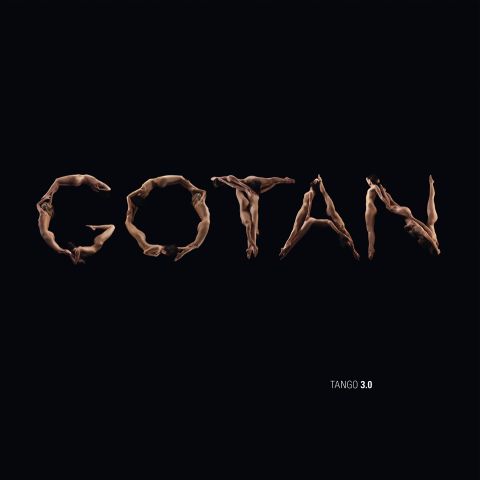
Gotan Project - Tango 3.0
Advanced word on the latest release from the tango/downtempo trio was that it didn't go far enough in mixing up the formula. Granted, 2006's Lunatico, with its emphasis on organic textures, rootsier arrangements, and a handful of hair-raising moments (the breakdown in "Diferente" constituting an instant classic) is a tough act to follow.
Tango 3.0 finds the trio in more eclectic territory, appropriating a wider array of genres and styles over the more coherent thesis of Lunatico. The result is a mischievous little record with some fascinating detours; these include the ska-inflected "Desilusion" and, in the album's most surprising turn, "Rayuela," which features a children's choir, Ennio Moricone horns, and a spoken-word non sequitur.
Of course, none of this means that Gotan Project are able to avoid kitsch entirely (see the misguided "Panamericana" ), but more often than not Tango 3.0 sounds thoroughly playful... and modern.
Film of the Week:
Primal Fear (1996)
Ed Norton's performance as Aaron Stampler, a guy who may or may not suffer from a multiple personality disorder and who may or may not have killed an archbishop, is justly lauded. It's peculiar because he's neither fully convincing as the polite, stuttering Aaron, nor as the leering sociopath "Roy" that is his other persona. Which amounts to being wholly convincing as both, really. And as it turns out, that is precisely the point. The big reveal at the end may not be all that shocking, but as usual, it's the process of the getting there that matters.
Three Region Blend - Starbucks
While you should be wary of most Starbucks coffee, on occasion they'll offer an exclusive that gets it just about right. Casi Celo was such a find, and now comes the Three Region Blend. Sampling from the three coffee growing regions of the world, the blend is a little passive at worst, elegant at best. A medium-bodied expedition, it's easy going down but provides enough cocoa/floral notes to make you feel like you've been somewhere. The herbal touches are appropriately underplayed but do enough to counterbalance the more heavily Latin America-leaning characteristics. Perfect late afternoon coffee.
Album of the Week:
Gotan Project - Tango 3.0
Advanced word on the latest release from the tango/downtempo trio was that it didn't go far enough in mixing up the formula. Granted, 2006's Lunatico, with its emphasis on organic textures, rootsier arrangements, and a handful of hair-raising moments (the breakdown in "Diferente" constituting an instant classic) is a tough act to follow.
Tango 3.0 finds the trio in more eclectic territory, appropriating a wider array of genres and styles over the more coherent thesis of Lunatico. The result is a mischievous little record with some fascinating detours; these include the ska-inflected "Desilusion" and, in the album's most surprising turn, "Rayuela," which features a children's choir, Ennio Moricone horns, and a spoken-word non sequitur.
Of course, none of this means that Gotan Project are able to avoid kitsch entirely (see the misguided "Panamericana" ), but more often than not Tango 3.0 sounds thoroughly playful... and modern.
Film of the Week:
Primal Fear (1996)
Ed Norton's performance as Aaron Stampler, a guy who may or may not suffer from a multiple personality disorder and who may or may not have killed an archbishop, is justly lauded. It's peculiar because he's neither fully convincing as the polite, stuttering Aaron, nor as the leering sociopath "Roy" that is his other persona. Which amounts to being wholly convincing as both, really. And as it turns out, that is precisely the point. The big reveal at the end may not be all that shocking, but as usual, it's the process of the getting there that matters.
Subscribe to:
Posts (Atom)